Sealcoating
- Surface cleaning with blowers to remove dirt and debris
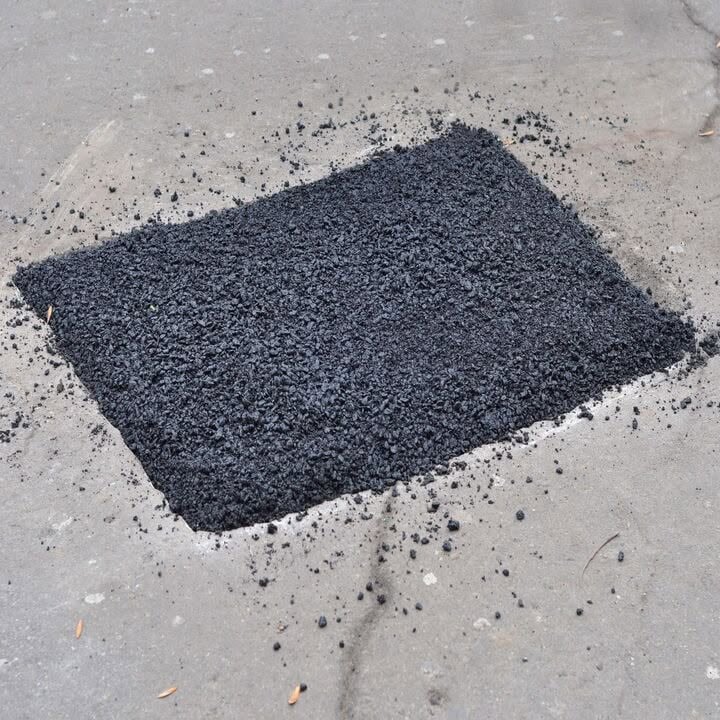
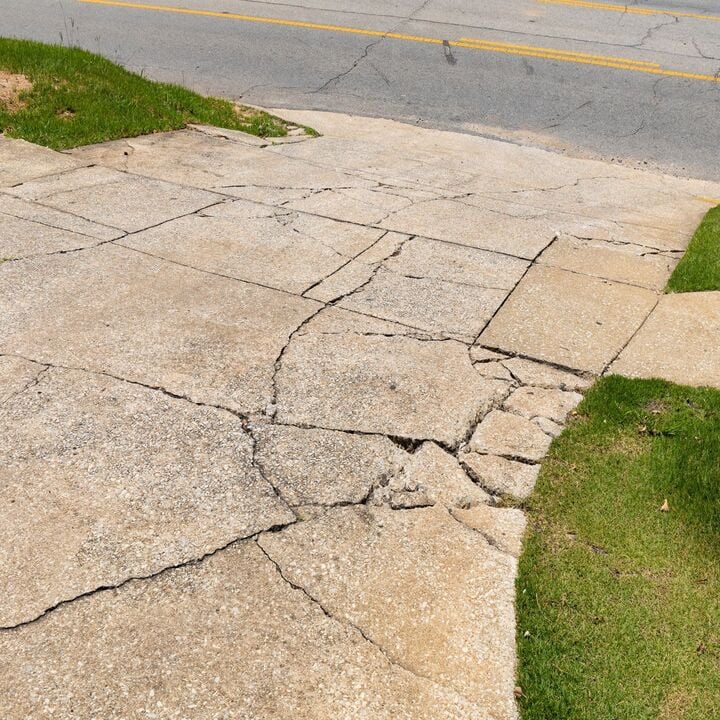
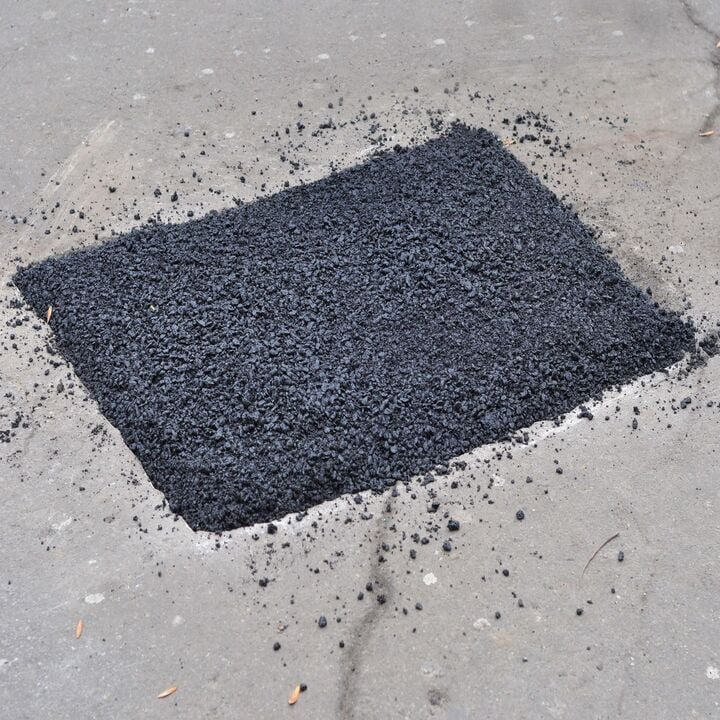
- Crack sealing before sealcoat application (cracks wider than ¼ inch)
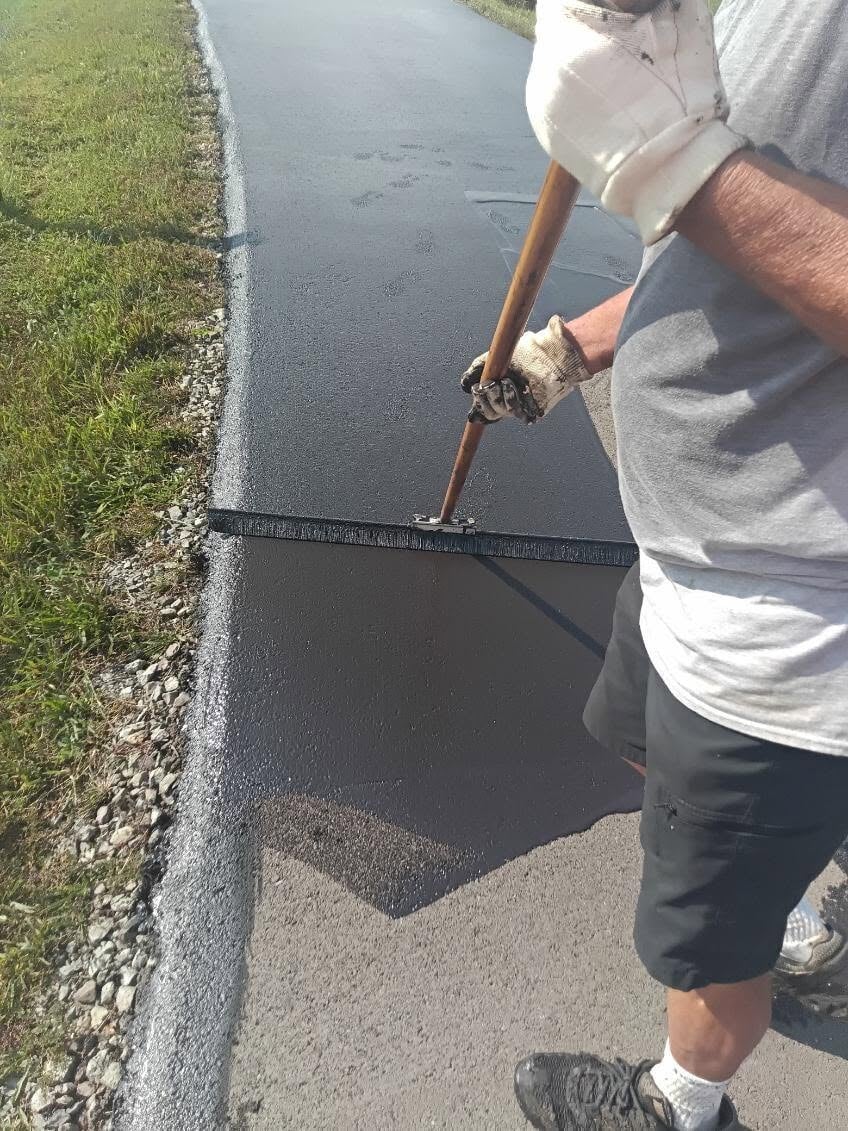
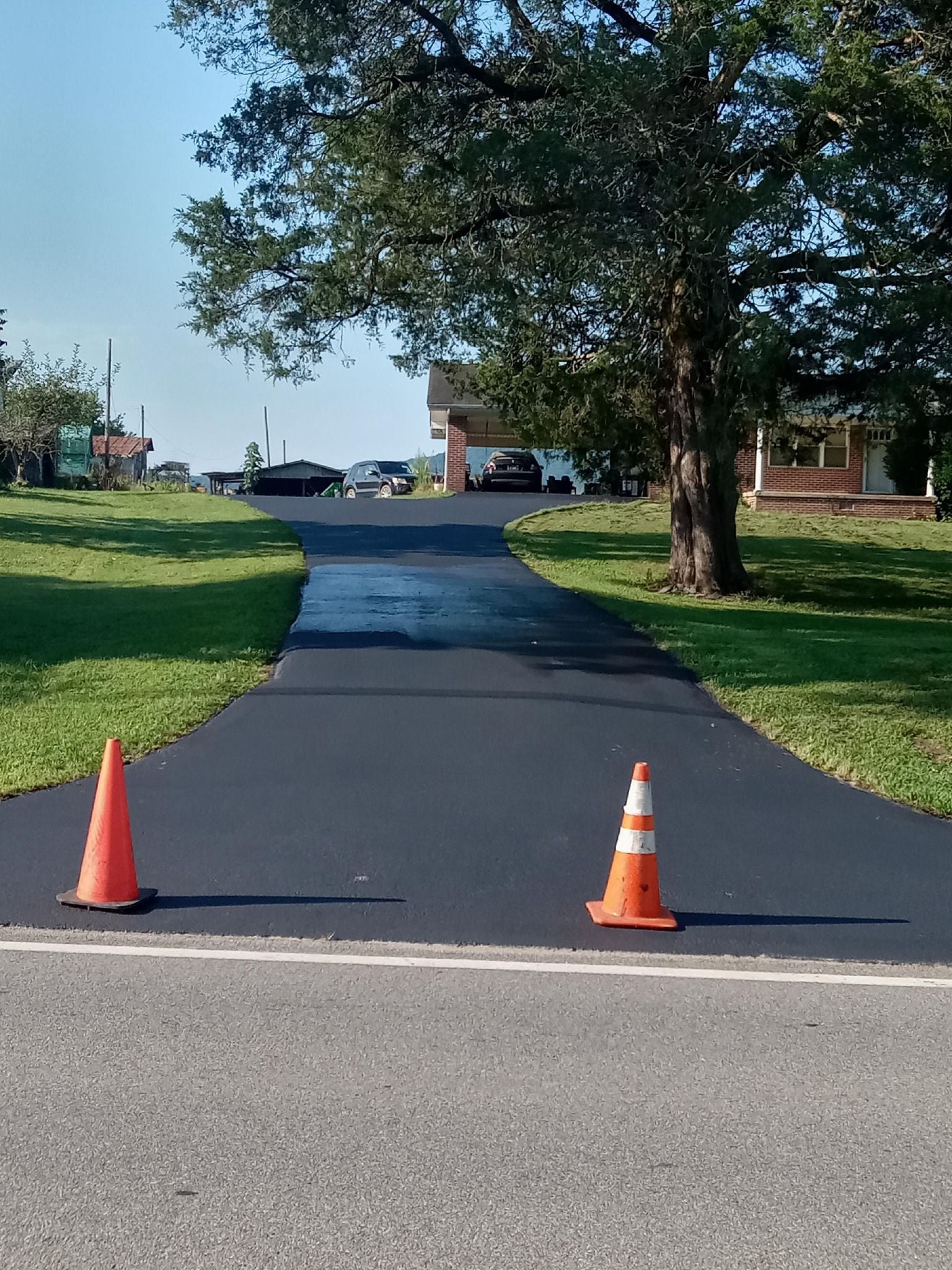
- Two thin coats of asphalt emulsion sealer applied by spray or squeegee
- Weather monitoring to ensure 48 hours of dry conditions
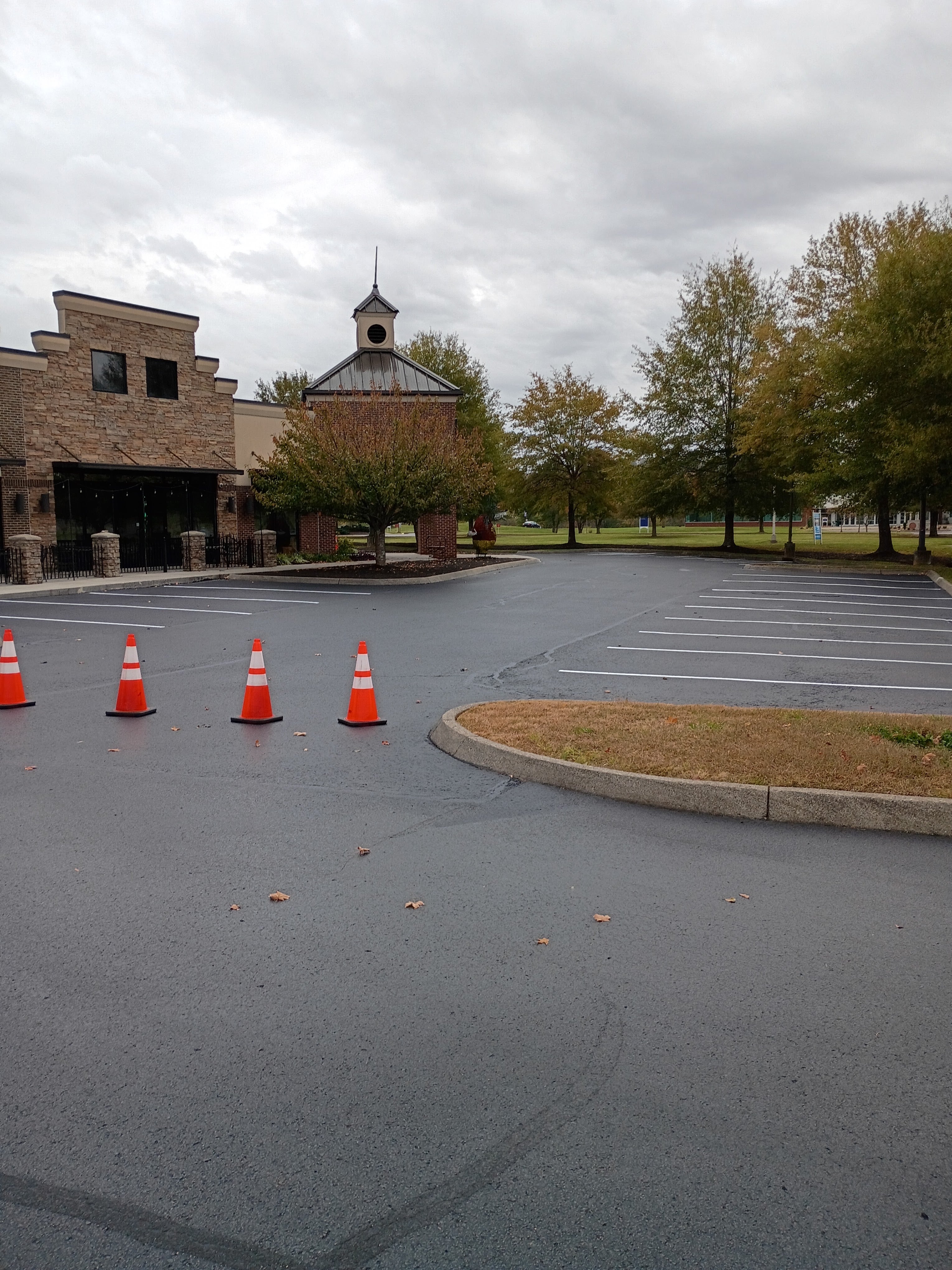
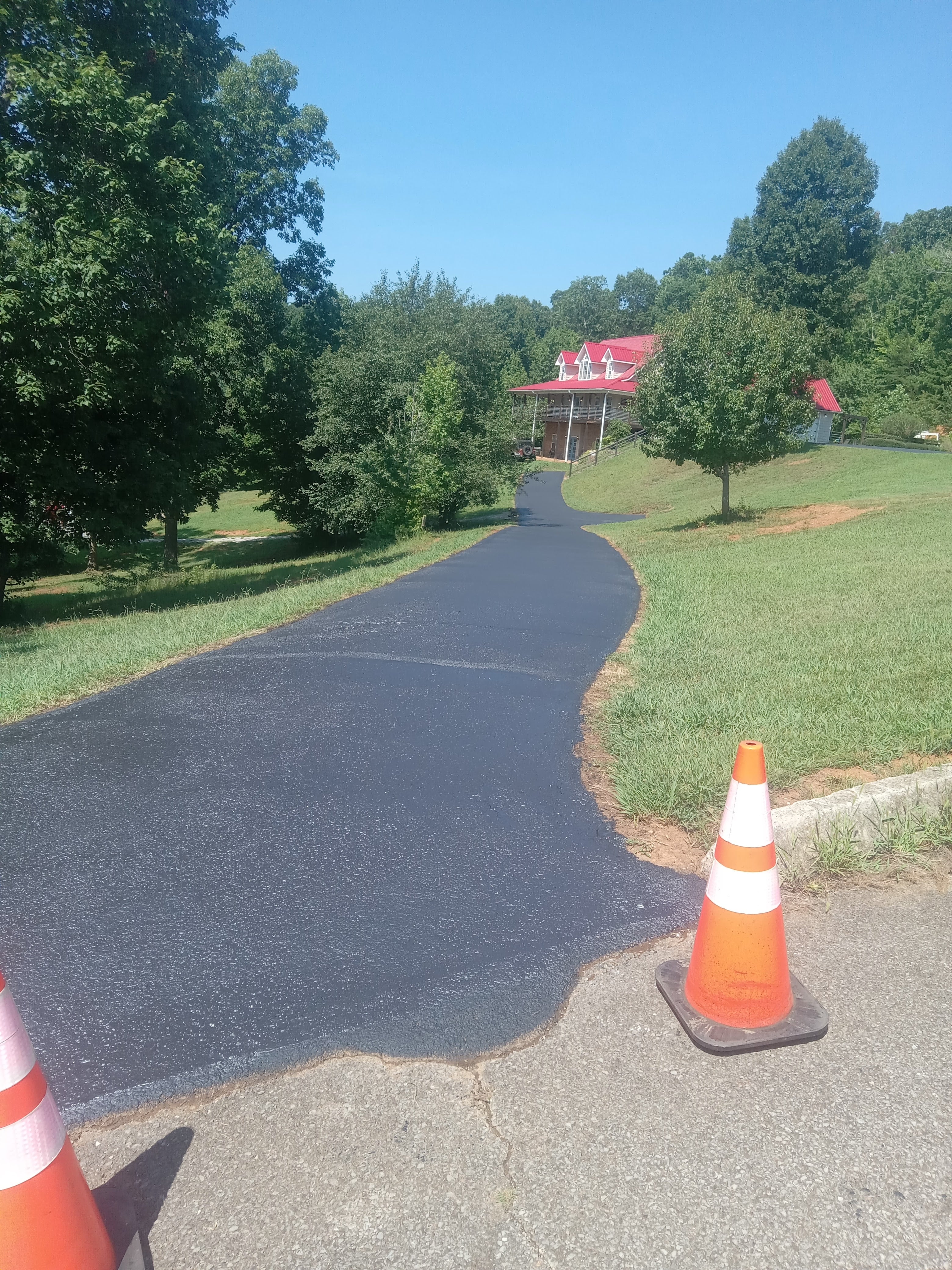
- Traffic cones and barricades during cure time
- Coordination with striping work if needed (after sealer cures)
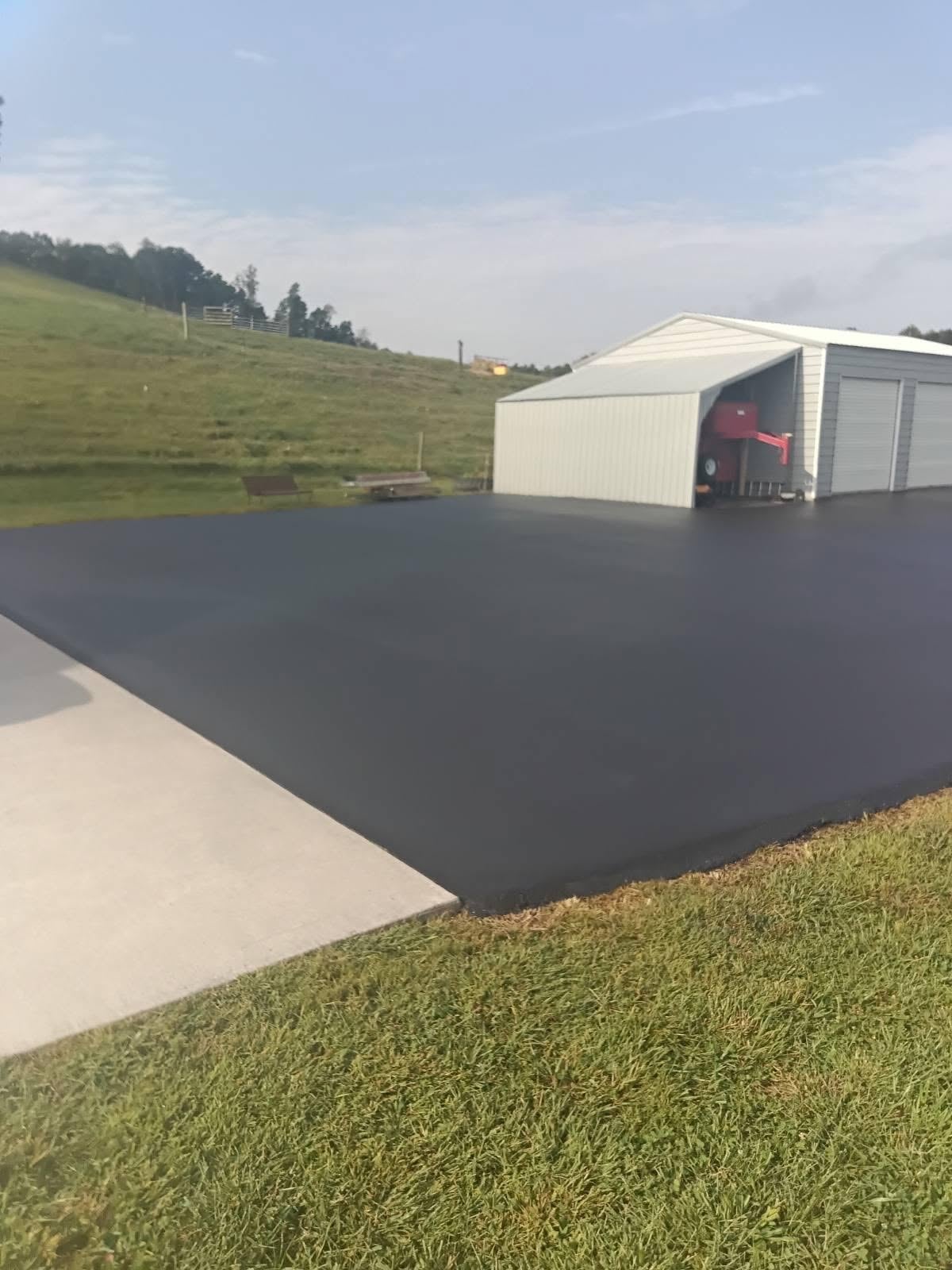
Sealcoating is a protective layer that slows down asphalt deterioration. Asphalt binder oxidizes when exposed to sun and air — it gets brittle, loses flexibility, and starts cracking. Sealer blocks UV rays and repels water, which keeps the binder intact longer.
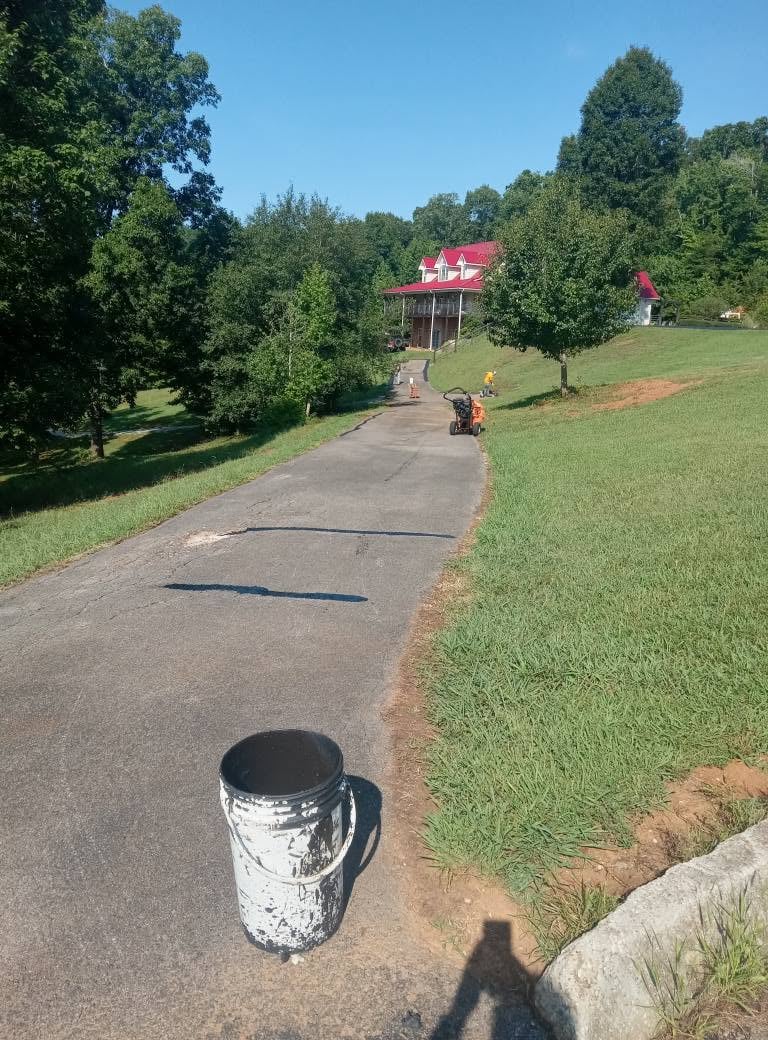
We use asphalt emulsion sealer — a mix of asphalt, water, and additives. It's the standard now in Tennessee and meets federal specifications for pavement protection. We apply it with a spray rig for large commercial lots or a squeegee for residential driveways, depending on the job size and access.
“If you sealcoat over cracks, they'll still let water through and continue to widen. We crack-seal first, let the filler cure, then sealcoat.”
Timing matters. Brand-new asphalt needs 6-12 months to cure before the first sealcoat. If you seal too early, you trap volatiles in the pavement and it never fully hardens. After the first coat, reseal every 2-3 years for residential driveways, every 1-2 years for high-traffic commercial lots in Roane County.
Weather controls the schedule. We need at least 48 hours of dry weather — 24 hours before and 24 hours after application. Temperature has to stay above 50°F during application and overnight while it cures. That means late April through October in most of Tennessee. If it rains within 24 hours, the sealer washes off and you start over. That's why we watch the forecast closely and won't start a job if rain is coming.
Before we seal, we clean the surface with blowers to remove dirt and debris. We fill cracks first — sealer won't bridge cracks wider than a quarter-inch. The surface has to be completely dry. We apply two thin coats rather than one thick coat; thin coats cure faster and bond better. You can walk on it in 4-6 hours, drive on it in 24-48 hours depending on temperature and humidity.
For commercial lots across the region, we coordinate the work to minimize disruption. We can section off areas and seal in phases so part of the lot stays open for customers. Striping happens after the sealer cures — usually a week later if the weather cooperates.