Striping and Pavement Marking
- Layout measurement and marking per local code and ADA requirements
- Traffic paint or thermoplastic application with walk-behind striper
- Stenciling for arrows, symbols, accessible space markings, and fire lanes
- Diagonal hatching for access aisles and no-parking zones
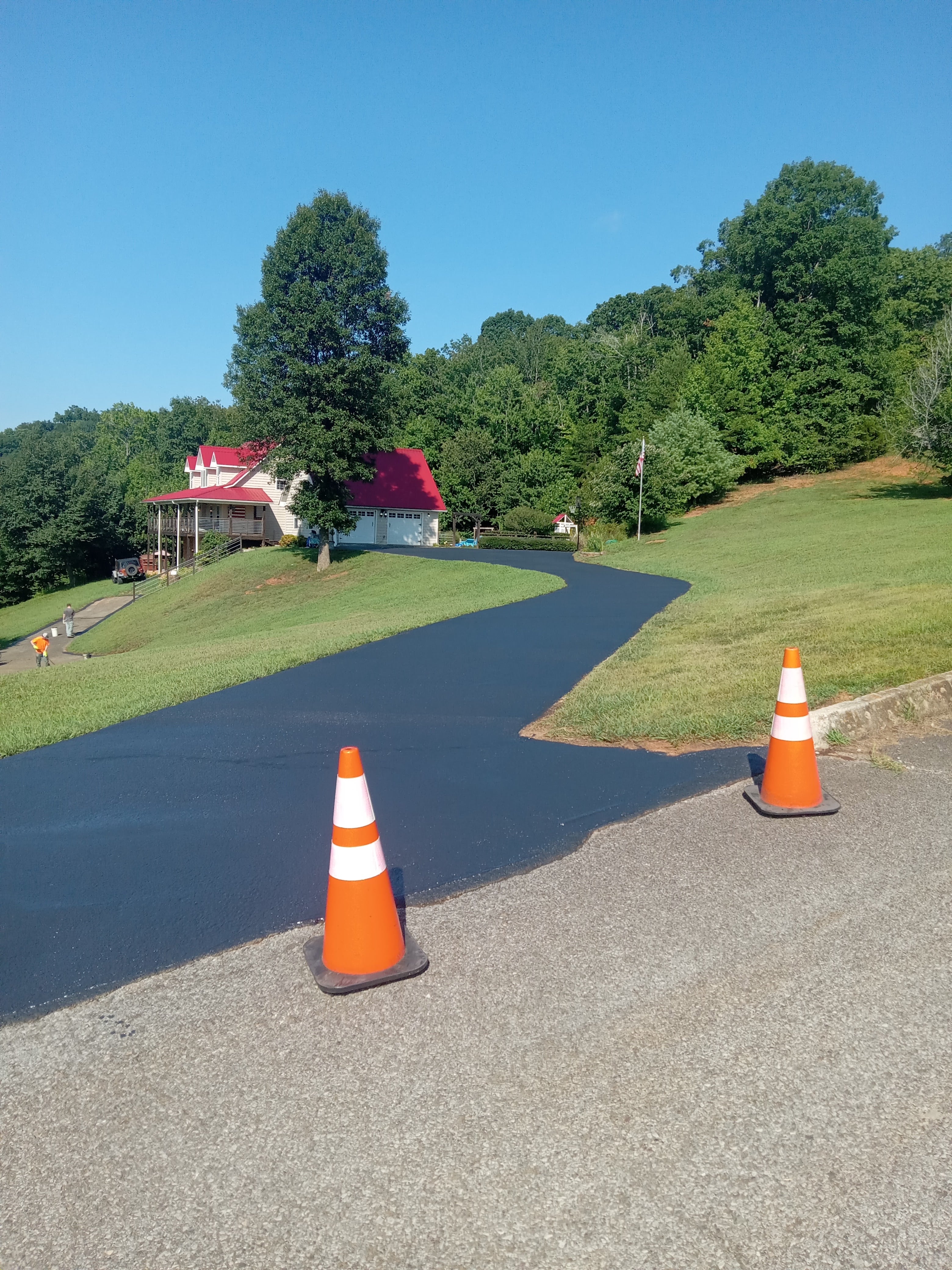
- Traffic cones and barricades during drying (30-60 minutes for paint)
- Coordination with sealcoating schedule if both services are planned
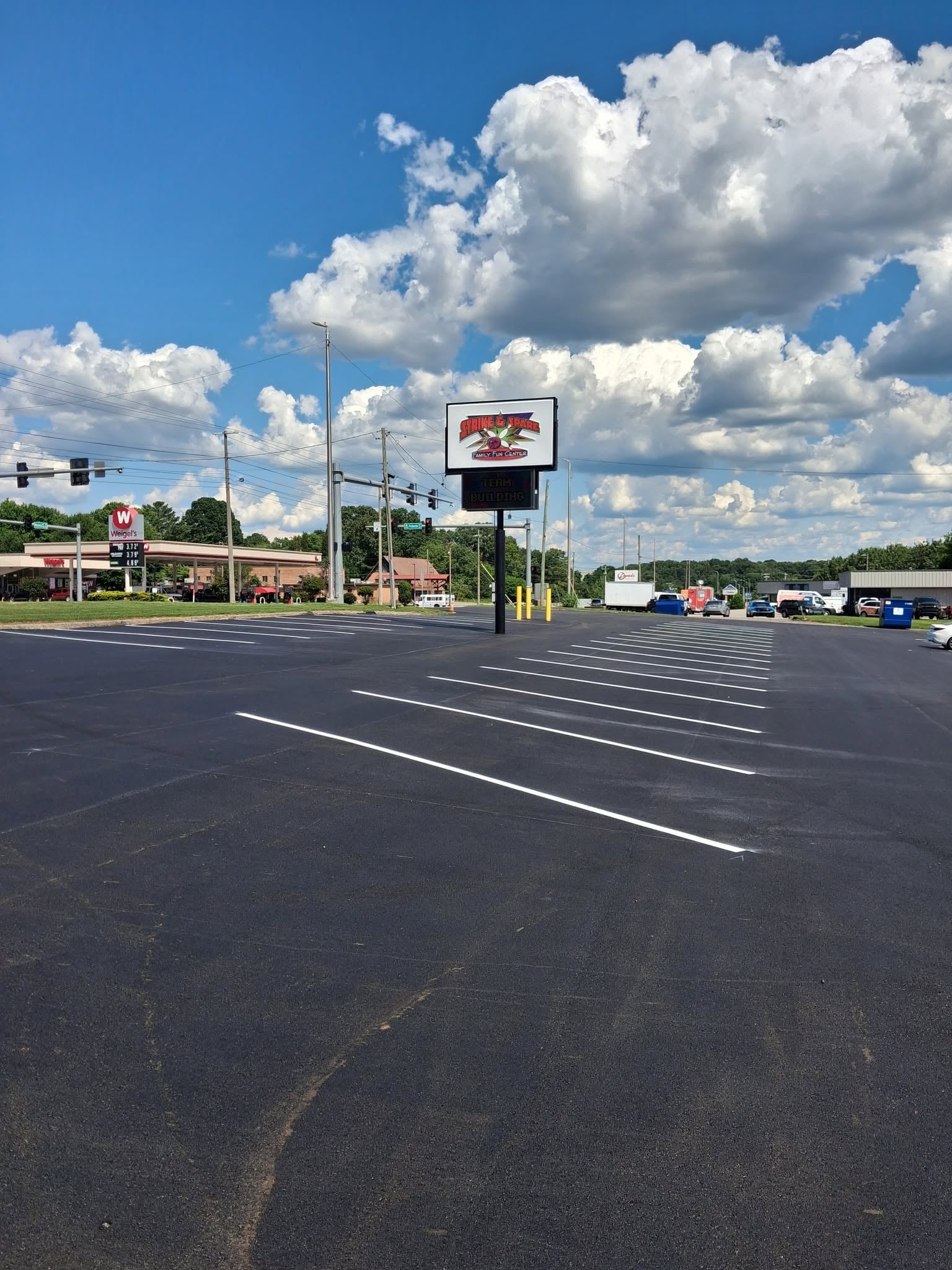
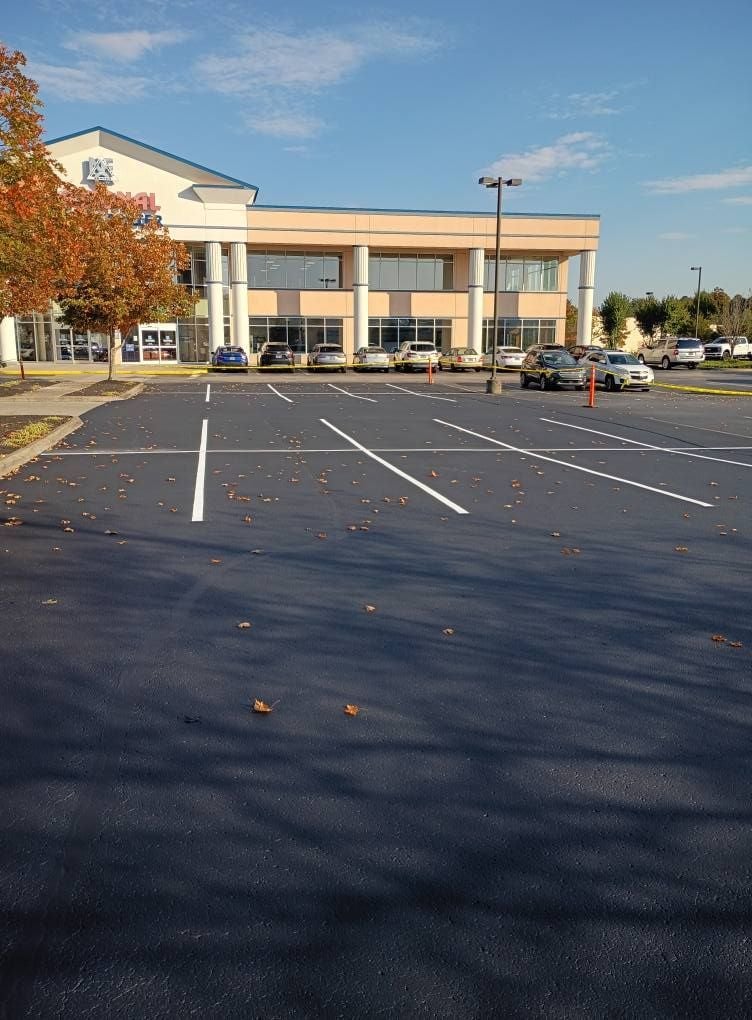
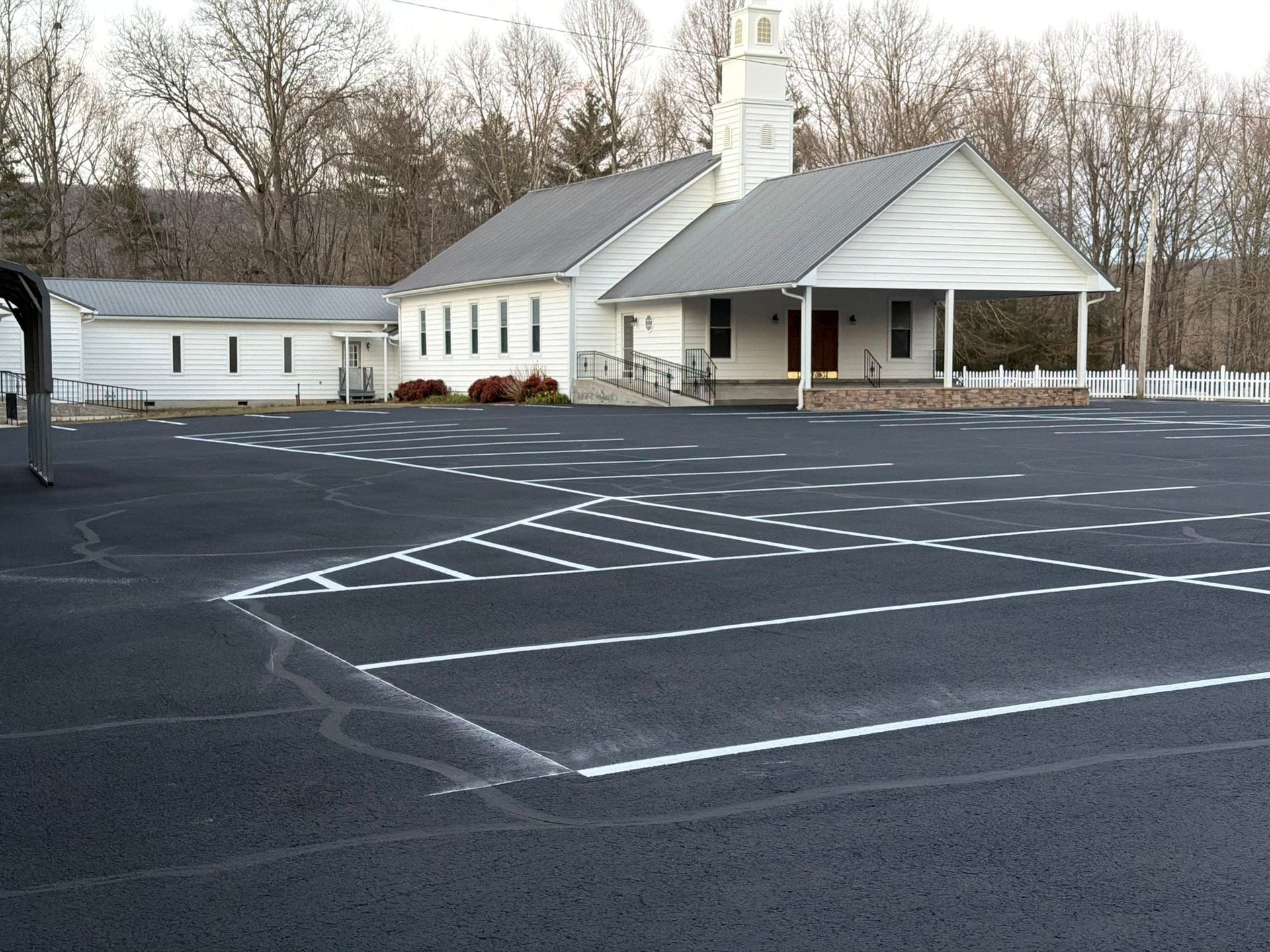
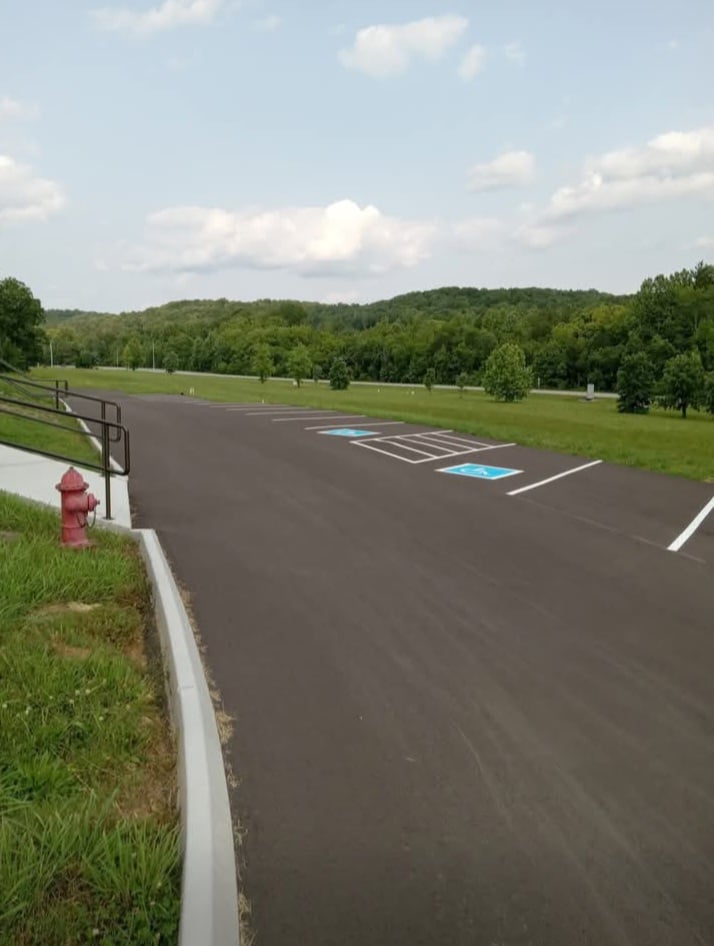
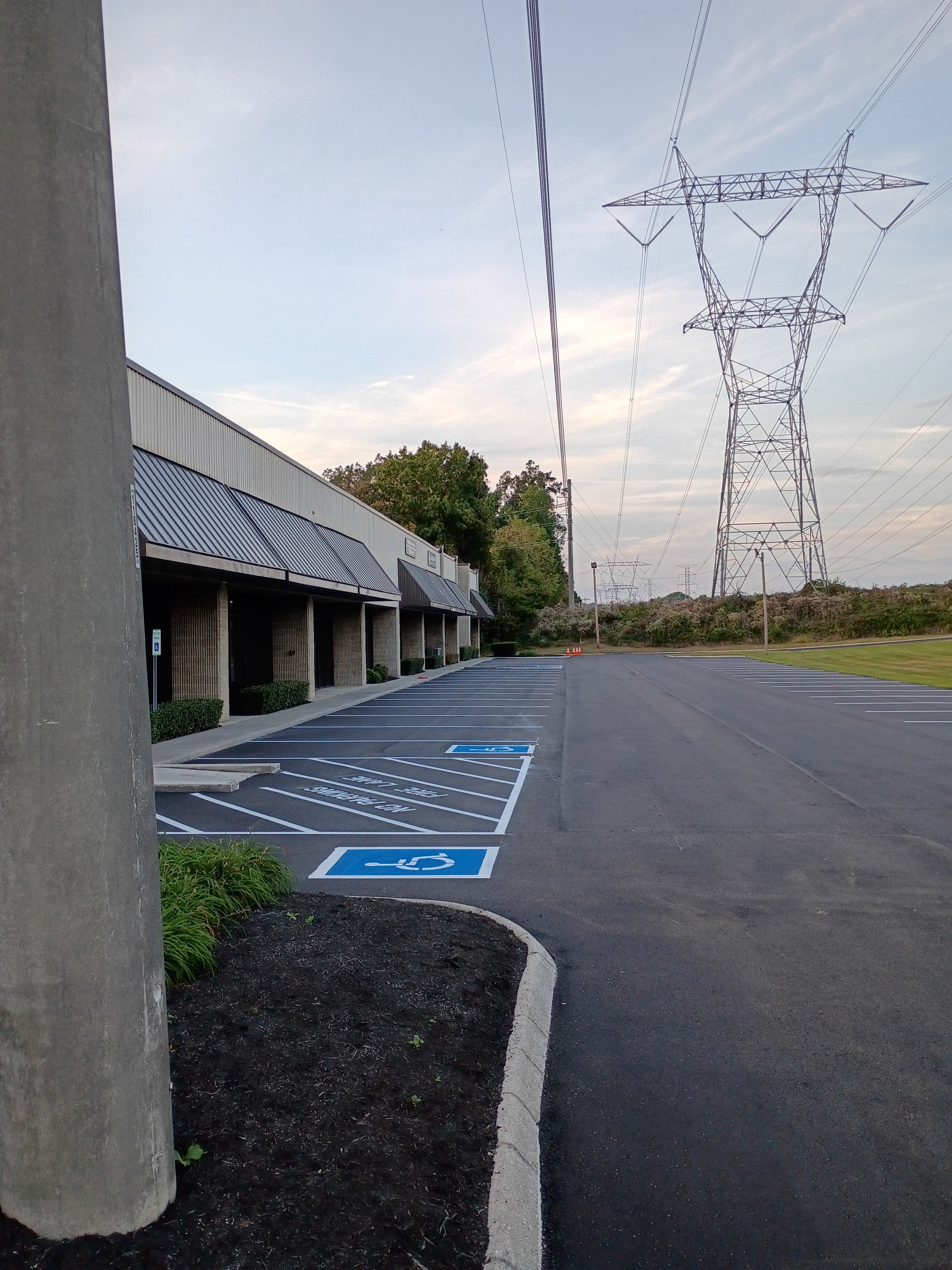
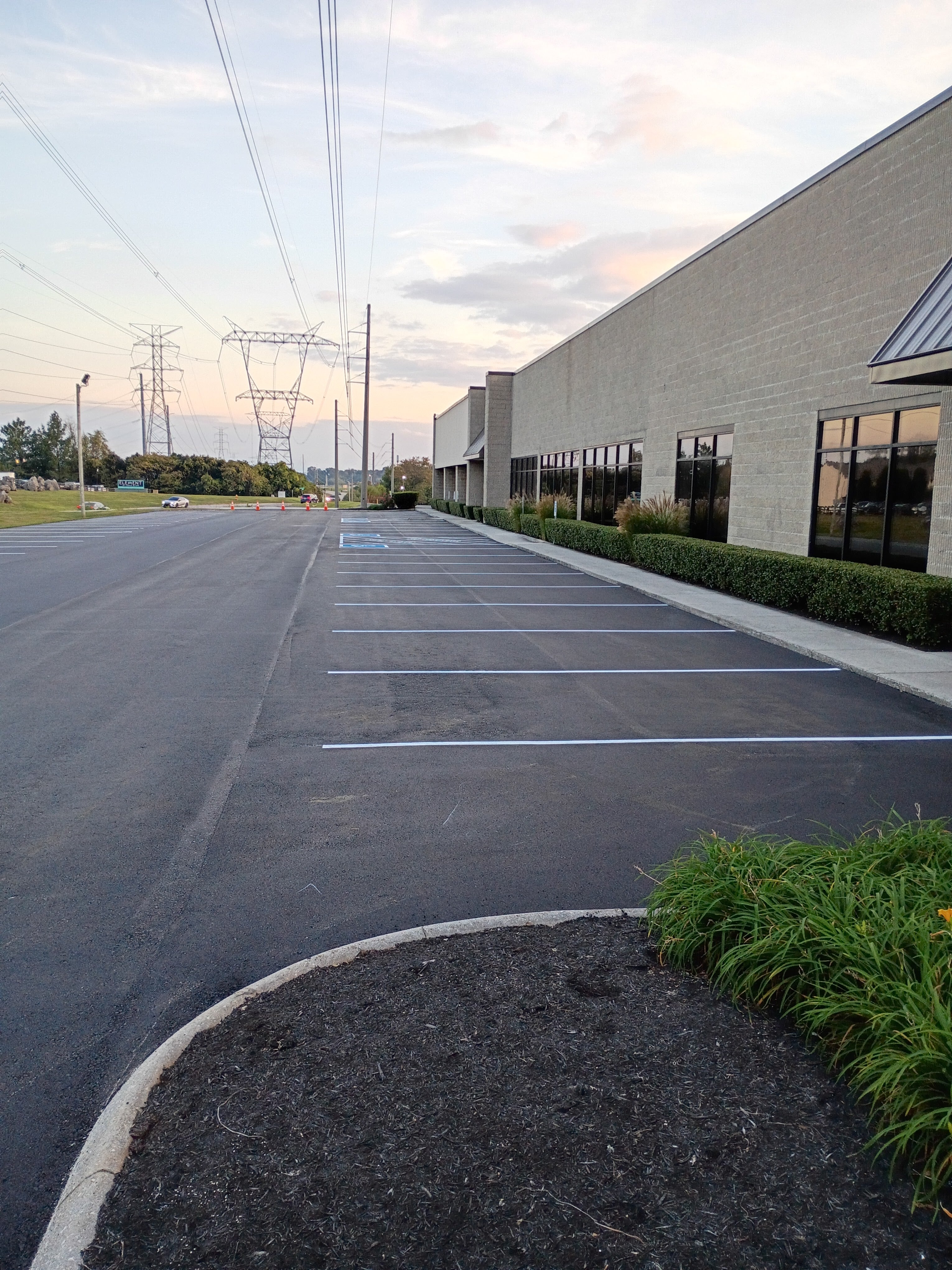
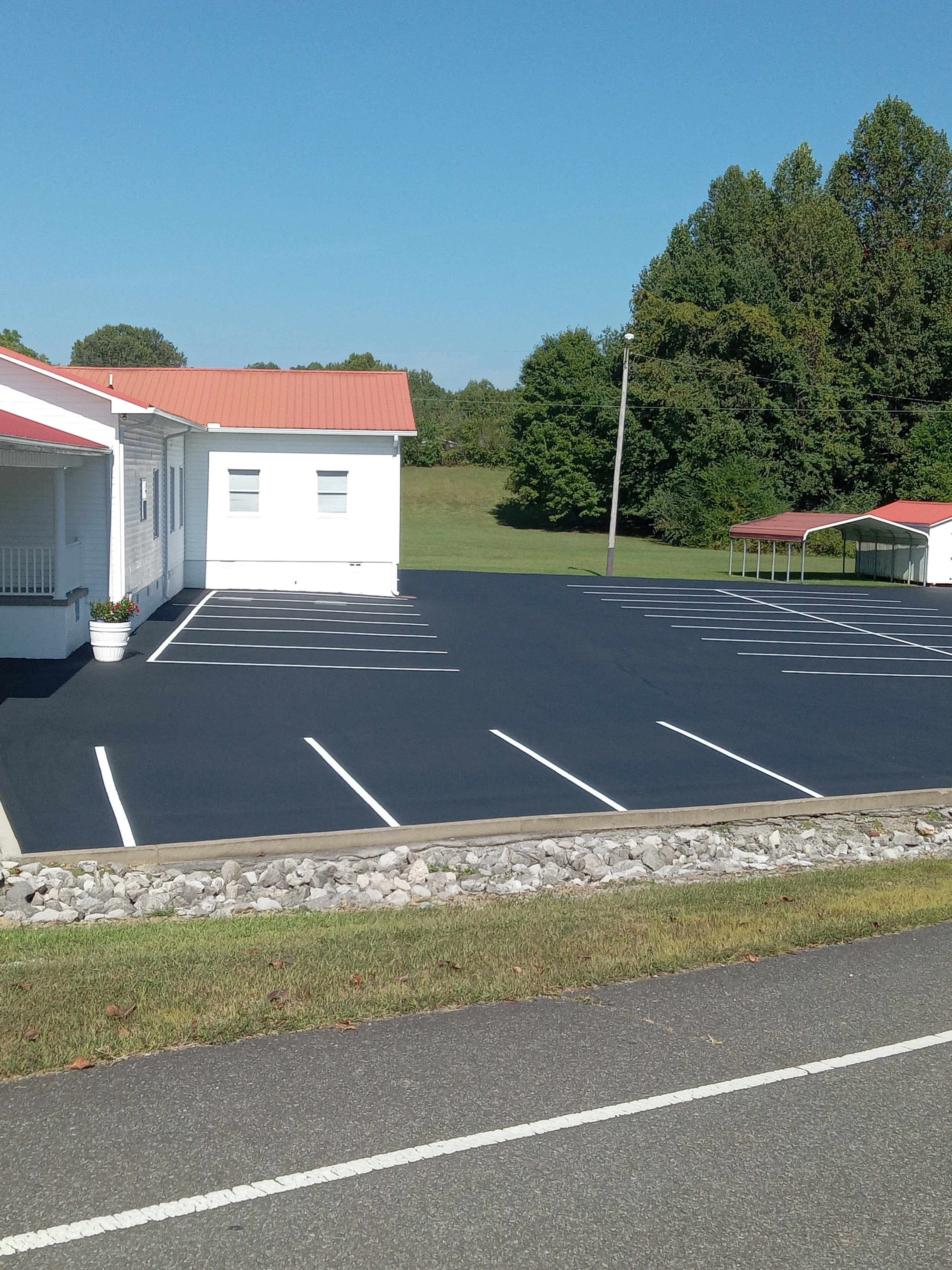
Striping organizes traffic flow and keeps your parking lot compliant with local codes and ADA requirements. Fresh, visible lines make a property look maintained and reduce liability — faded lines lead to confusion, parking disputes, and accessibility complaints.
We use traffic-grade paint designed for pavement. Water-based acrylic is the standard — it dries fast, has low VOCs, and holds up to traffic reasonably well. Solvent-based alkyd paint is more durable but takes longer to dry and has stronger fumes. For high-traffic areas or long-lasting markings, thermoplastic is the best option. It's a hot-applied plastic material that bonds to the asphalt and lasts 3-5 years, but it costs three to four times as much as paint.
“Faded lines lead to confusion, parking disputes, and accessibility complaints. Fresh, visible lines make a property look maintained and reduce liability.”
Layout comes first. For new striping, we measure and mark stall locations, drive aisles, fire lanes, and accessible spaces according to local code. Standard parking stalls are 9 feet wide by 18 feet deep; compact stalls are 8 feet wide. Drive aisles need to be wide enough for the expected vehicle type — 18 feet for two-way traffic with 90-degree parking, 24 feet if you've got delivery trucks.
ADA compliance is non-negotiable. Accessible parking spaces must be at least 8 feet wide with a 5-foot access aisle, or 11 feet wide with an 8-foot aisle for van-accessible spaces. The access aisle gets hatched with diagonal lines and marked "No Parking." The space itself gets the International Symbol of Accessibility. One in every six accessible spaces has to be van-accessible. Get this wrong and you're looking at ADA complaints and fines.
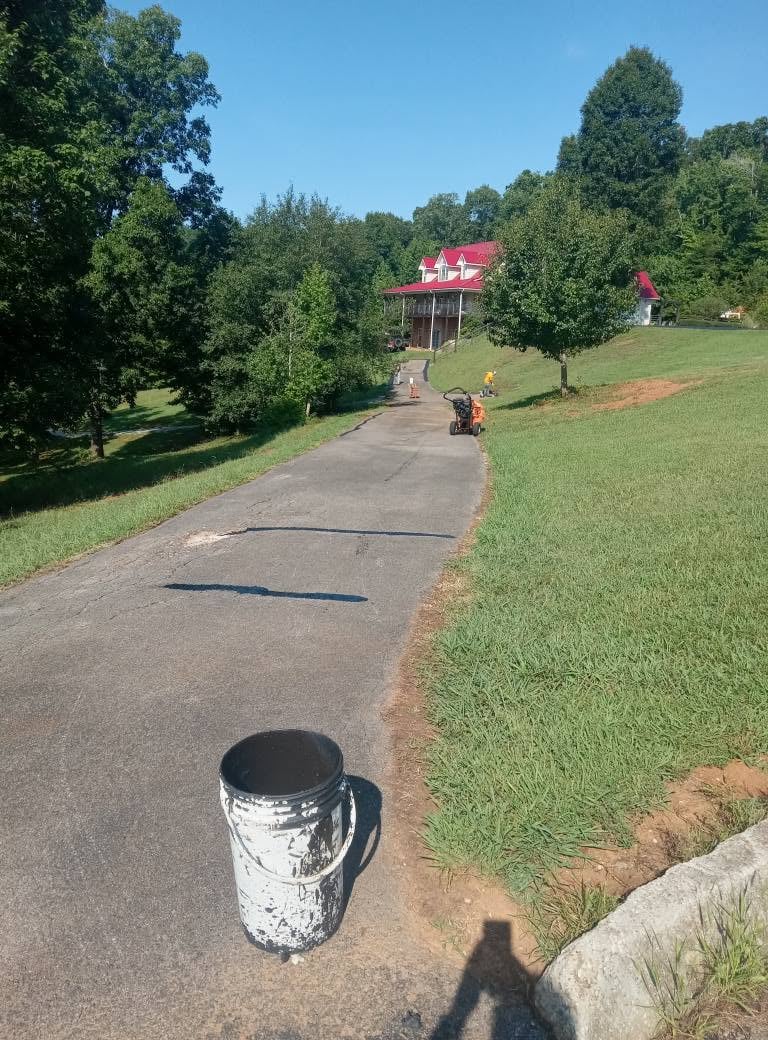
We apply paint with a walk-behind striper that lays down a clean 4-inch line. Arrows, symbols, and letters get stenciled. Paint needs 30-60 minutes to dry depending on temperature and humidity. We cone off fresh lines until they're dry enough for traffic.
Restriping is part of regular maintenance for commercial lots in Roane County. Paint fades under UV and wears off under traffic. Plan to restripe every 1-2 years for painted lines, every 3-5 years if you used thermoplastic. We coordinate striping work with sealcoating — if you're doing both, we sealcoat first, let it cure for a week, then stripe.